When a living room feels a little flat, new cushions can be an appealing small change. They are easier to move than a sofa and can introduce color without painting a wall. But a pile of cushions that has to be removed before anyone can sit down is an expensive inconvenience. Start with comfort and proportion, then choose the colors.
Look at the sofa before shopping
Measure the usable seat depth and back height. A deep sofa may accommodate larger cushions comfortably, while a compact seat can feel crowded by the same size. Put an existing cushion on the sofa and sit down with it behind your back. Does it improve the position, or push you too far forward?
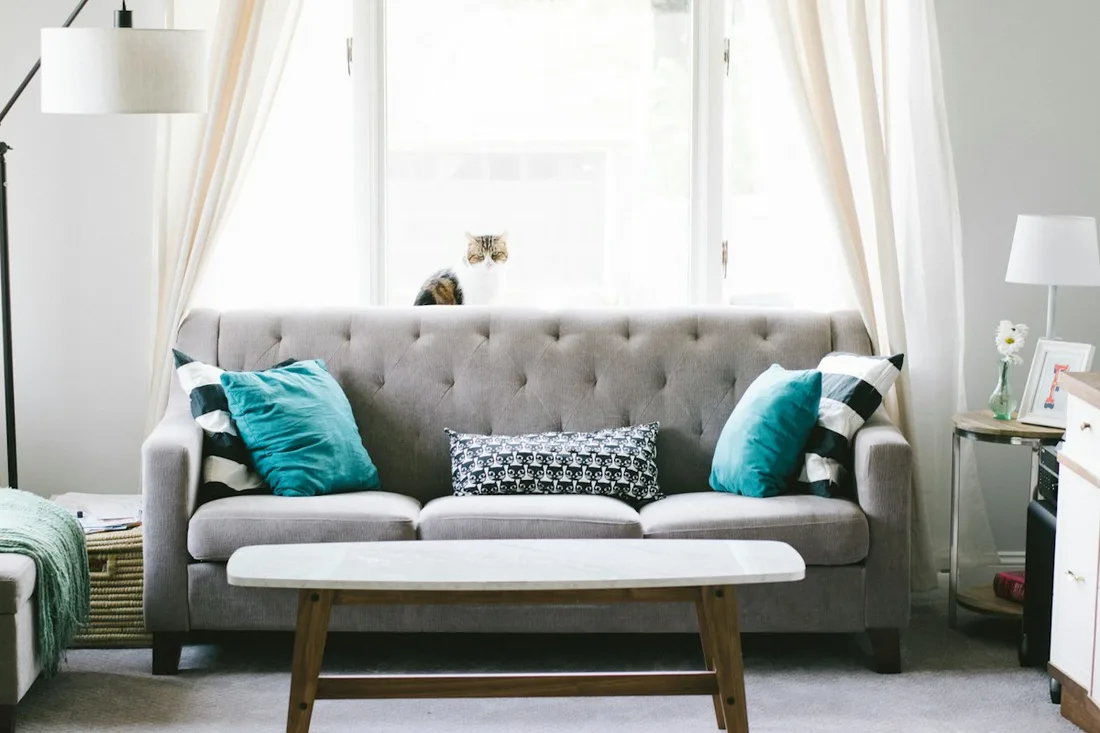
Count how many people usually use the seat. On a smaller two-seater, a cushion at each end may be plenty. A longer sofa might take a larger pair plus one smaller accent, but there is no requirement to fill every empty space. Leave enough room for everyday use and an obvious place to set aside a cushion if needed.
Make the cover the working layer
Removable covers are helpful when the sofa is used for snacks, pets, or regular family evenings. Check the washing instructions and closure before purchasing. A cover described as removable may still require professional cleaning. A concealed zip can look neat, but it should feel substantial enough to tolerate occasional removal.
Texture changes the feel of a room. Smooth cotton or linen-like woven covers can be easy to combine with existing furniture. Nubby textures add depth, although loose loops may be a poor fit around claws or snag-prone clothing. Velvet can give a richer appearance, but the care instructions and direction of its pile deserve a closer look.
| Priority | Consider | Check carefully |
|---|---|---|
| Frequent washing | Removable machine-washable cover | Shrinkage guidance and drying method |
| Back support | Firmer insert | Actual thickness and dimensions |
| Soft lounging | More flexible fill | Whether it needs regular reshaping |
| Busy household | Durable tight weave | Snagging and spot-cleaning instructions |
Use the room as a color reference
Choose one color already present in a rug, artwork, curtain, or chair. Repeat it in a cushion, then add a quieter companion shade. This makes the purchase feel connected to the room instead of like a separate styling exercise. Photograph the room in daylight and compare product colors cautiously; screens and lighting can shift how a fabric appears.
For patterns, vary scale rather than combining several equally busy prints. A larger stripe, a small textured weave, and a solid color can sit together comfortably. If the room already has patterned curtains and a patterned rug, a simple cover may provide the most useful pause.
Compare inserts as well as covers
A beautiful cover on the wrong insert can look slack or feel awkward. Confirm whether an insert is included and whether the listed measurement refers to the cover or the complete cushion. Follow the manufacturer’s sizing guidance rather than assuming every cover benefits from an oversized insert.
Different fills have different care needs. Consider sensitivities, animal-derived material preferences, and how much reshaping you want to do. Read the composition label, particularly for blended fills. It is reasonable to choose a straightforward synthetic option for easy everyday use if it suits the comfort and care requirements.
Buy one useful pair first
Use the home shopping checklist to compare dimensions, care labels, and total cost. Buying two well-chosen covers for inserts already owned can be more economical than replacing everything. Order a fabric sample when available, or check the return policy if the color is critical to the room.
Try the cushions for an ordinary evening before adding more. Keep the ones that make sitting comfortable and move any surplus to a different chair only if it is useful there. The reading corner guide explains how a cushion can support a specific seat, and the relaxed gathering guide considers what happens when more people use the room. The finished arrangement should feel inviting when the sofa is occupied, not only when it is photographed.